One-page monthly budget
Income, bills, spending and savings, with budget and actual side by side.
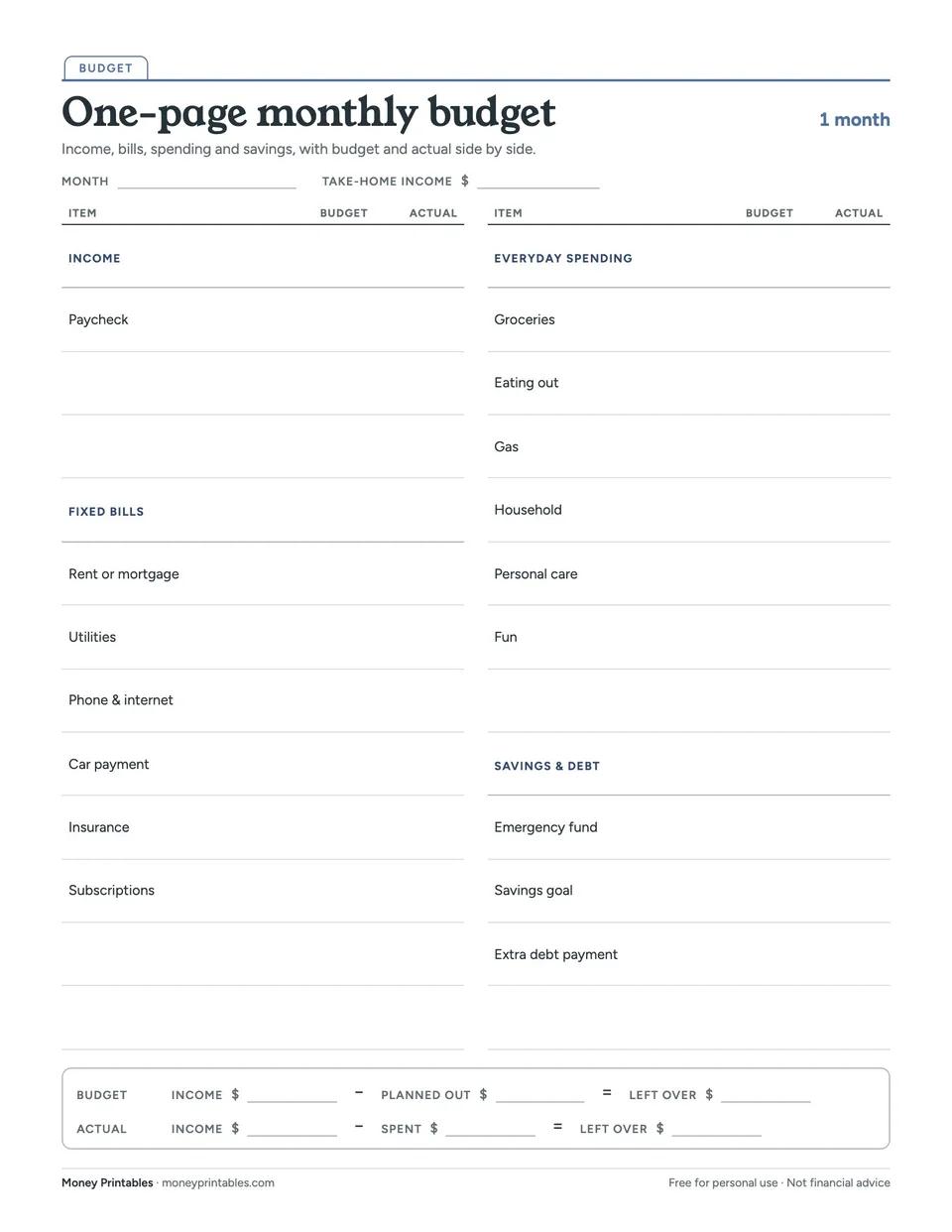
This is the simplest useful budget: one page, one month. Write down what comes in, then plan what goes out in three groups: fixed bills that stay the same, everyday spending that changes, and savings and debt payments.
Each line has a budget column and an actual column. At the end of the month, compare them. The gaps show you where next month’s plan needs to change.
How it works
Write your take-home income, then plan three groups: fixed bills (the same each month), everyday spending (changes each month) and savings and debt. Each line has a budget column and an actual column. At the end of the month, the difference shows where the plan needs adjusting.
How to use it
- Write your take-home income for the month at the top.
- Fill in the budget column for every bill, spending category and savings goal.
- At the end of the month, fill in what you actually spent and check what is left.
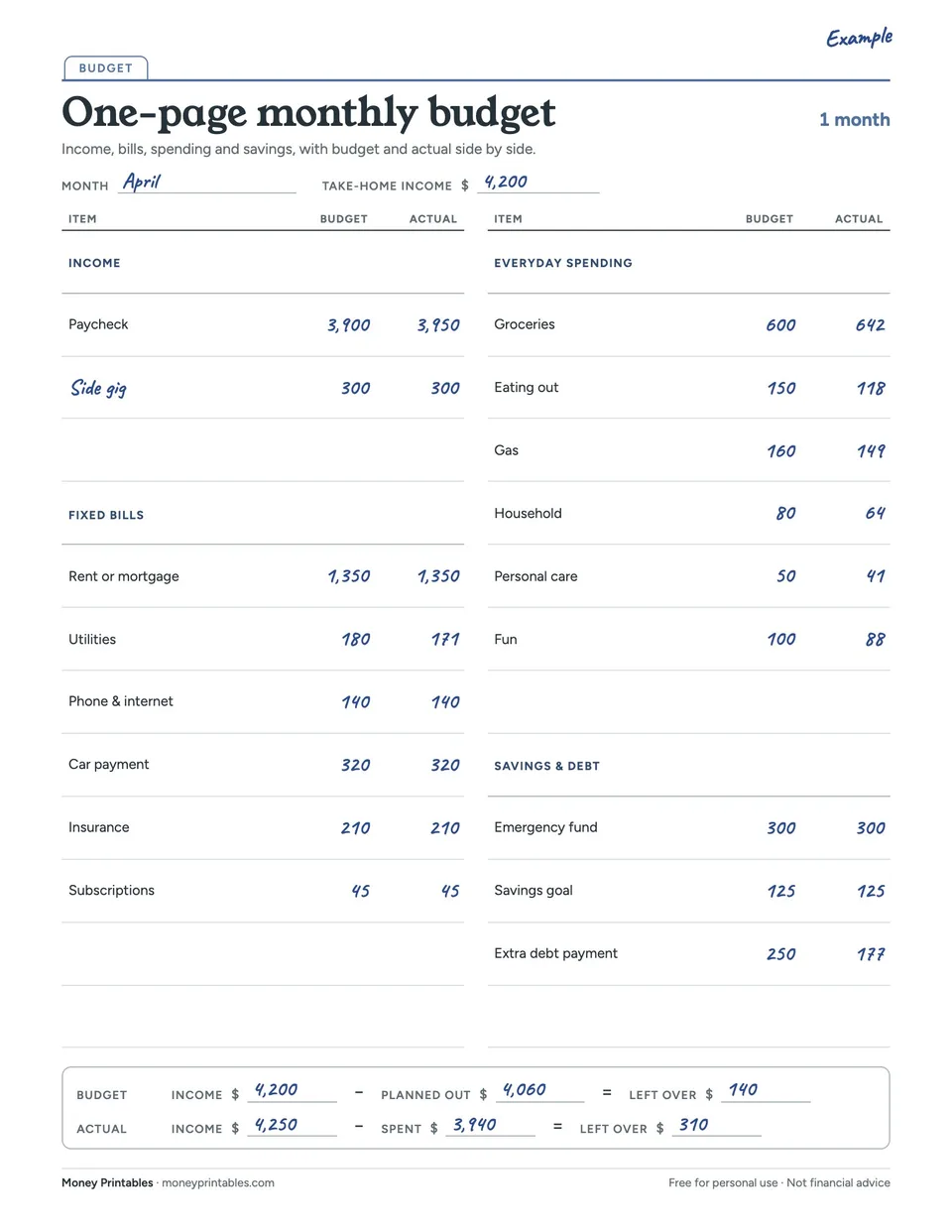
Ways to use it
- Use it alongside a spending tracker for your first month.
- Keep a stack: one sheet per month in a binder.
- Couples: fill it in together on the first weekend of the month.
Tips
- Use last month’s bank statement to fill in realistic numbers the first time.
- If "left over" is negative, trim everyday spending first; fixed bills are harder to change quickly.
Questions
How do I make a simple monthly budget?
Write down your take-home pay, list fixed bills, estimate everyday spending, add savings and debt payments, and check that the plan is not more than your income.
What should be in a monthly budget?
Income, housing, utilities, transportation, insurance, groceries, personal spending, savings and debt payments, plus a line for things you forget.
What is the difference between budget and actual?
Budget is your plan; actual is what really happened. Comparing them is how a budget gets more accurate each month.
Goes well with
- Daily spending tracker Write down everything you spend for a month, and mark each one need or want.
- Emergency fund tracker Start with $1,000, then build to three months of expenses.
More budgets
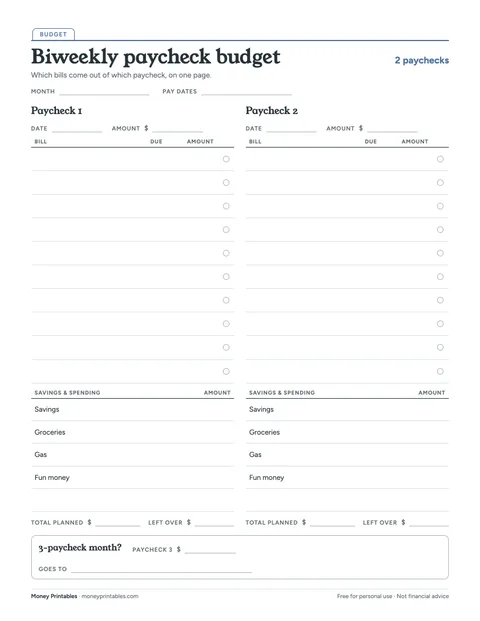
Biweekly paycheck budget
Which bills come out of which paycheck, on one page.
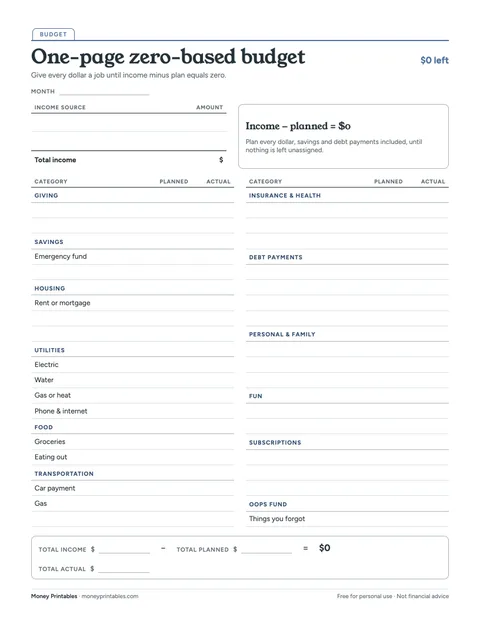
One-page zero-based budget
Give every dollar a job until income minus plan equals zero.
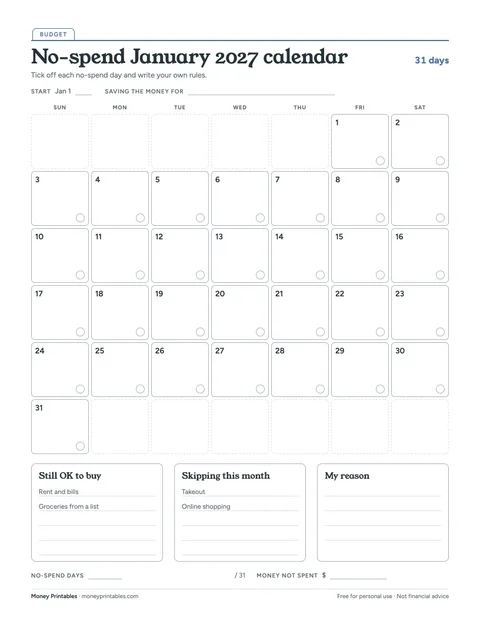
No-spend January 2027 calendar
Tick off each no-spend day and write your own rules.
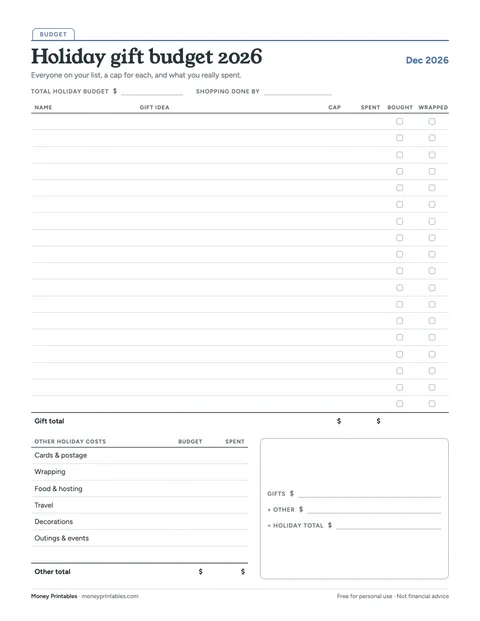
Holiday gift budget 2026
Everyone on your list, a cap for each, and what you really spent.
This printable is a general planning tool, not financial advice. Read the full disclaimer.