Daily spending tracker
Write down everything you spend for a month, and mark each one need or want.
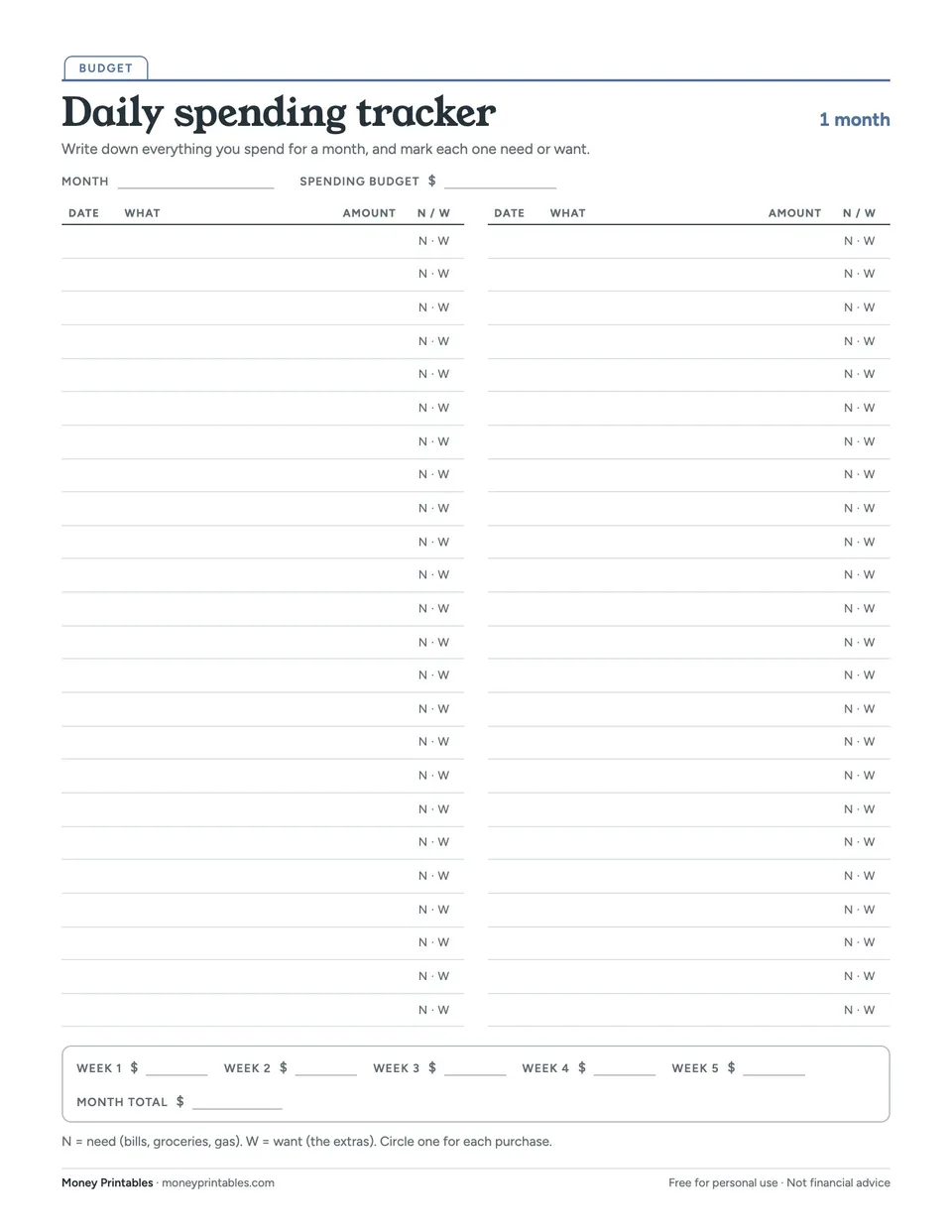
Tracking every purchase for a month is the fastest way to see where money really goes. Most people find a category or two that is much bigger than they thought.
Each line has room for the date, what you bought, the category and the amount, plus a quick need-or-want mark. Weekly totals at the bottom show how the month is going.
How it works
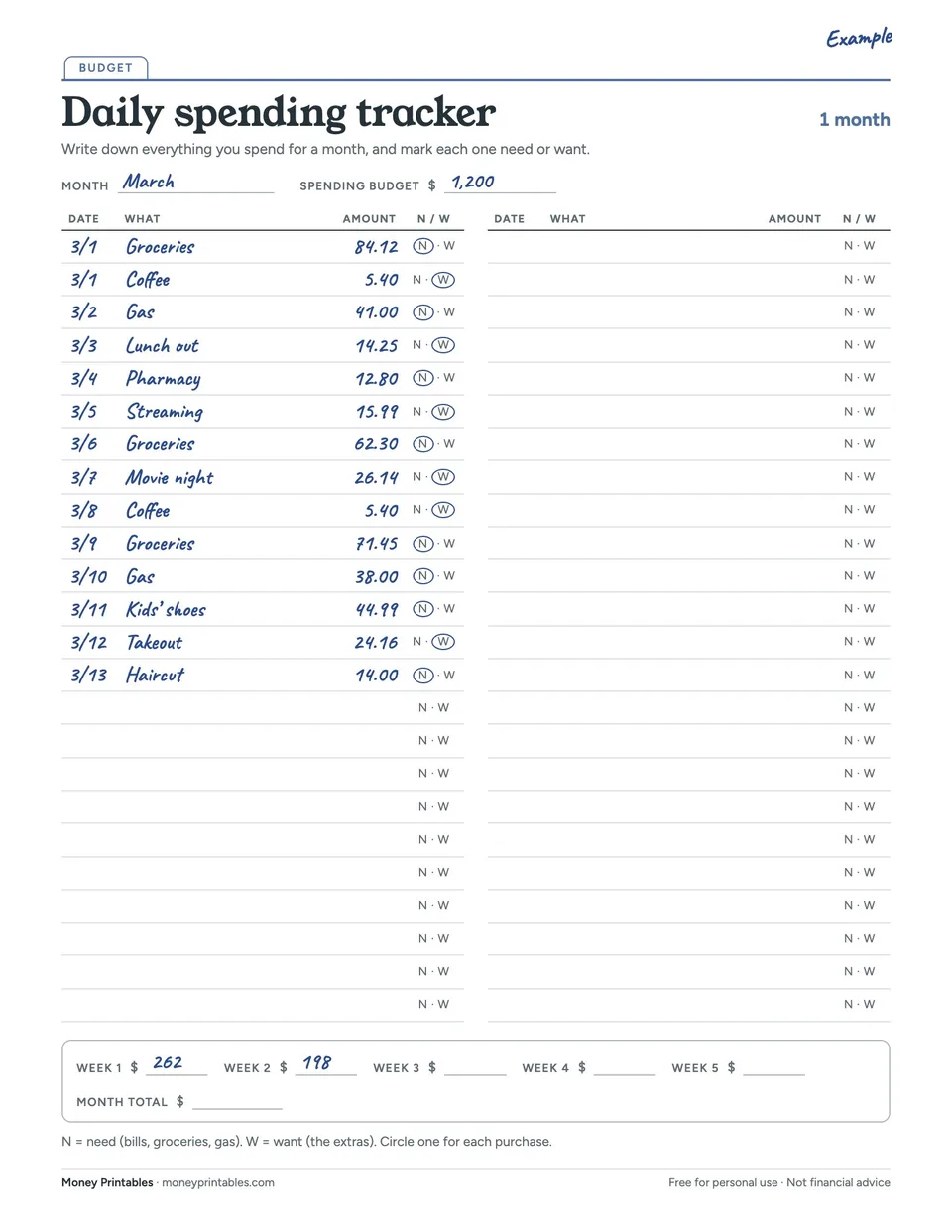
Write down every purchase the day you make it: the date, what you bought and the amount. Circle N for a need or W for a want. At the end of each week, add up the total. After a month you will know exactly where your money goes.
How to use it
- Write down every purchase the day you make it, even small ones.
- Circle N for a need or W for a want.
- Add up each week at the bottom and look for surprises.
Ways to use it
- Track only wants for a month to see your extras.
- Track a single category, like food, in detail.
- Couples: one sheet each, compared at the end of the week.
Tips
- Keep the sheet next to where you put your keys or wallet so it becomes a habit.
- Do not judge yourself in the first month. Just track, then decide what to change.
Questions
How do I track my daily spending?
Write down every purchase, including small ones, on the day you make it. Add up each week and look for patterns.
What is the difference between a need and a want?
A need is something you must pay for to live and work, like groceries or gas. A want is an extra, like takeout or a new gadget.
How long should I track spending?
One full month gives a good picture, because it includes all your bills and paydays.
Goes well with
- One-page monthly budget Income, bills, spending and savings, with budget and actual side by side.
- No-spend January 2027 calendar Tick off each no-spend day and write your own rules.
More budgets
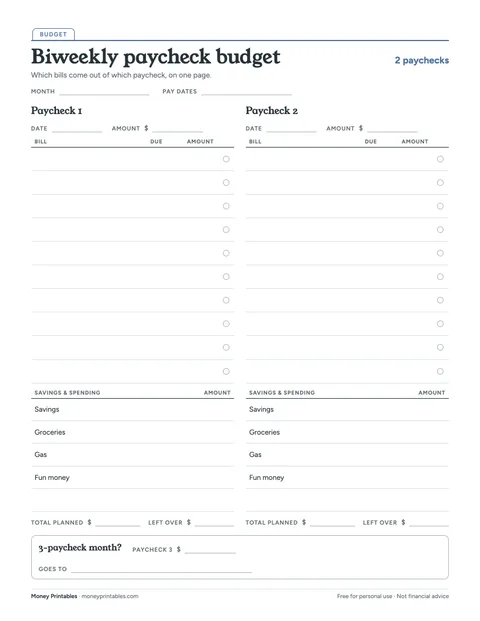
Biweekly paycheck budget
Which bills come out of which paycheck, on one page.
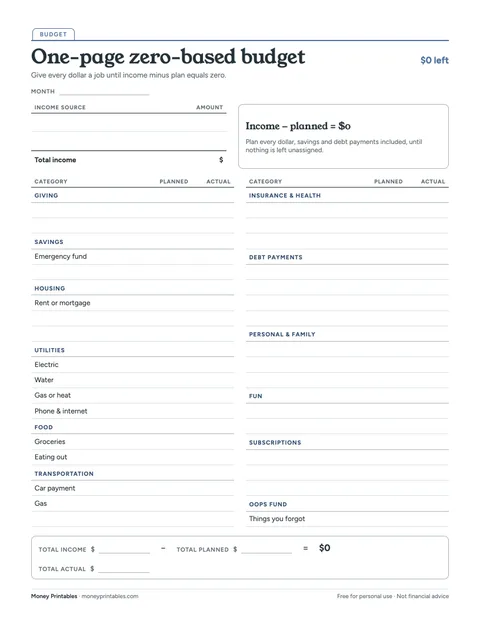
One-page zero-based budget
Give every dollar a job until income minus plan equals zero.
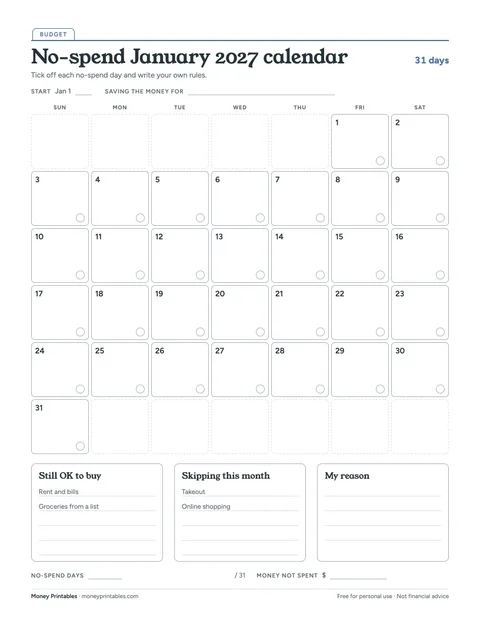
No-spend January 2027 calendar
Tick off each no-spend day and write your own rules.
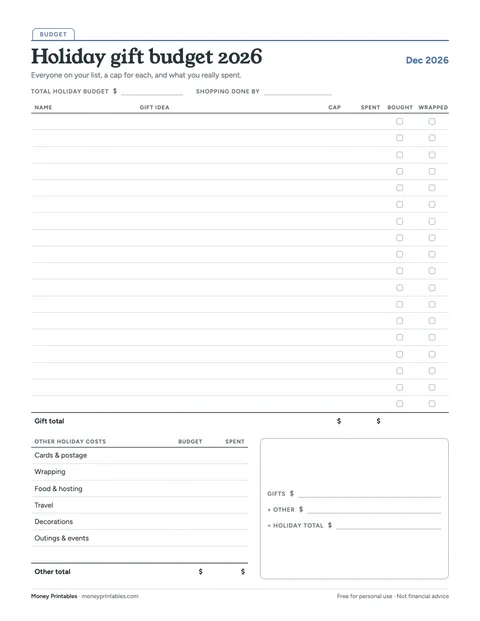
Holiday gift budget 2026
Everyone on your list, a cap for each, and what you really spent.
This printable is a general planning tool, not financial advice. Read the full disclaimer.