Emergency fund tracker
Start with $1,000, then build to three months of expenses.
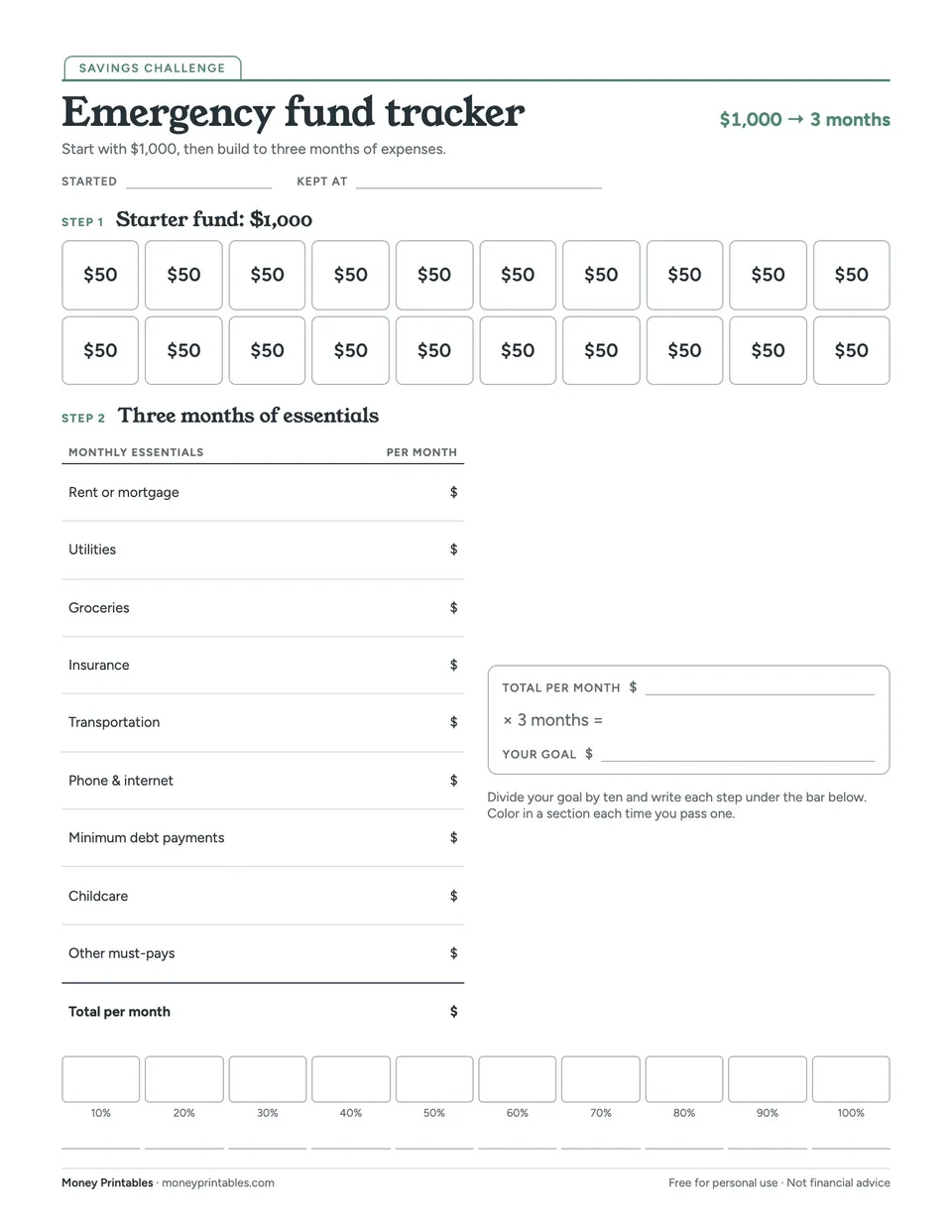
An emergency fund is money set aside for the things nobody plans for: a job loss, a medical bill, a broken-down car. A common approach is to build it in two steps, and this tracker follows that.
Step one is a $1,000 starter fund, shown as 20 boxes of $50. Step two works out three months of your essential costs, then tracks your progress toward that number in tenths.
How it works
Step one is a $1,000 starter fund, shown as 20 boxes of $50. Step two adds up your essential monthly costs and multiplies by three. That is your full goal, and the progress bar tracks it in tenths.
| Monthly essentials | Three-month goal | Each 10% step |
|---|---|---|
| $2,000 | $6,000 | $600 |
| $3,000 | $9,000 | $900 |
| $4,000 | $12,000 | $1,200 |
| $5,000 | $15,000 | $1,500 |
How to use it
- Color in a $50 box each time you add to the starter fund.
- When it is full, fill in your monthly essentials in step two and multiply by three.
- Write the dollar amount for each 10% under the progress bar, then color it in as you go.
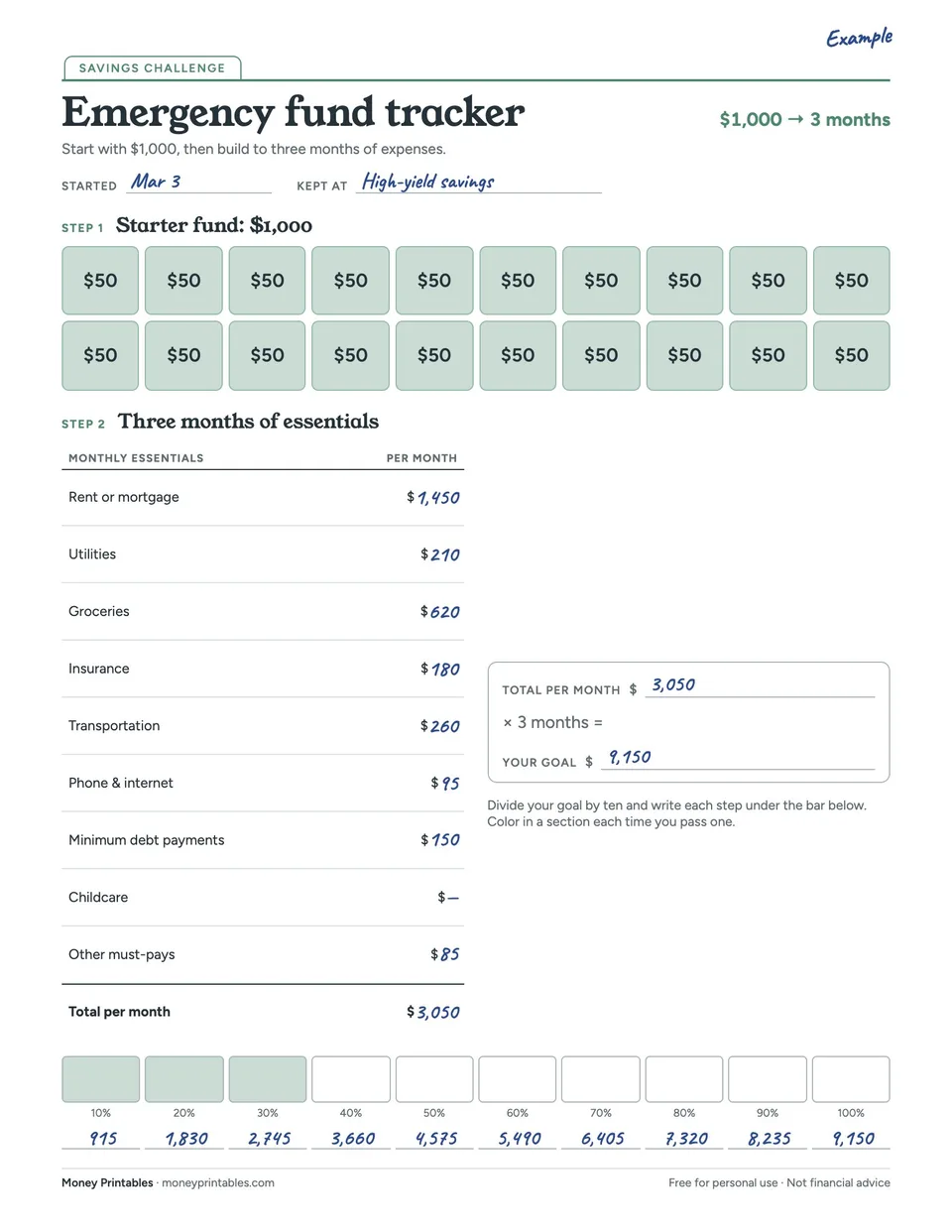
Ways to use it
- Aim for six months instead: double the goal in step two.
- Keep one tracker per account if you split the fund.
- Pair it with the $1,000 in 100 days challenge for the starter fund.
Tips
- Essentials means what you must pay: housing, utilities, food, insurance, transport and minimum debt payments.
- Keep the fund somewhere you can reach quickly, but not in your everyday account.
Questions
How much should be in an emergency fund?
A common guideline is three to six months of essential expenses, often starting with a smaller starter fund like $1,000. Your own situation may call for more or less.
What counts as an essential expense?
Costs you must pay to keep life running: housing, utilities, groceries, insurance, transportation, childcare and minimum debt payments.
Where should I keep my emergency fund?
Many people use a separate savings account that is easy to reach in a day or two but not linked to their everyday spending.
Goes well with
- One-page monthly budget Income, bills, spending and savings, with budget and actual side by side.
- $1,000 in 100 days One box a day for 100 days. Most are under $20.
More savings challenges
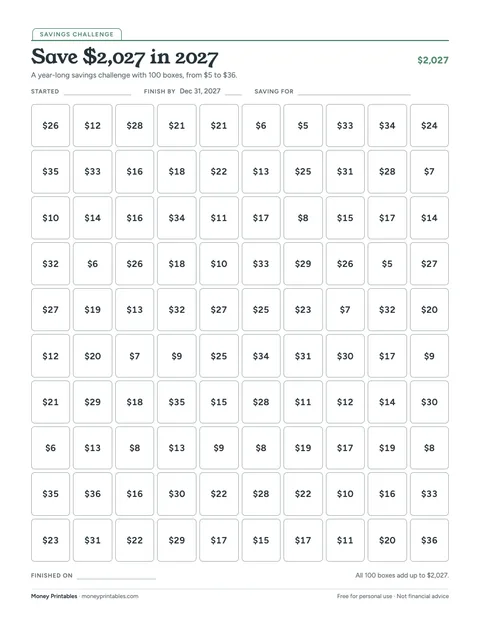
Save $2,027 in 2027
A year-long savings challenge with 100 boxes, from $5 to $36.
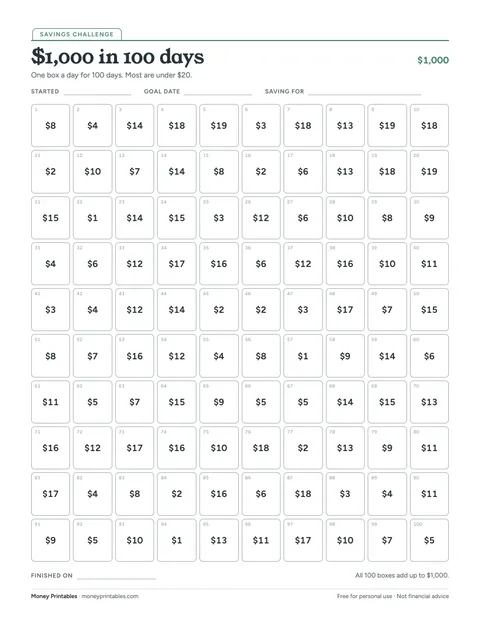
$1,000 in 100 days
One box a day for 100 days. Most are under $20.
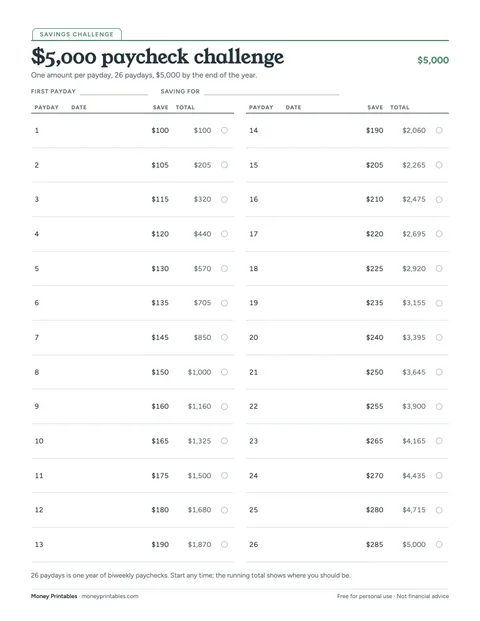
$5,000 biweekly paycheck savings challenge
One amount per payday, 26 paydays, $5,000 by the end of the year.
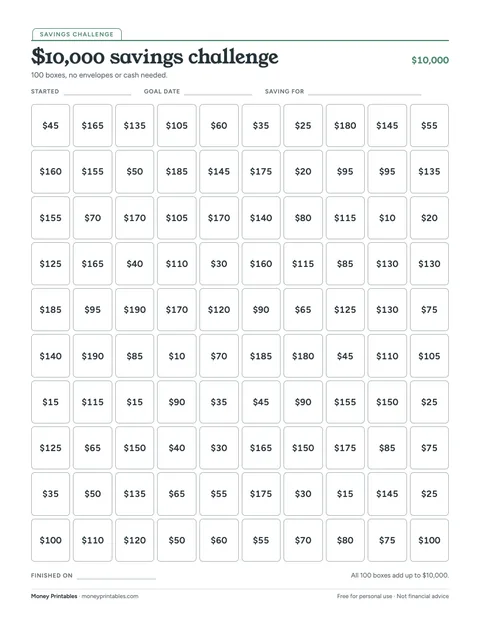
$10,000 savings challenge
100 boxes, no envelopes or cash needed.
This printable is a general planning tool, not financial advice. Read the full disclaimer.